Walnut blasting intake cleaning
Walnut blasting is a specialised service for direct injection engines, where carbon gradually builds up on the intake valves. These deposits restrict airflow, negatively affect engine operation and over time can show up in performance, fuel consumption and refinement. Cleaning the intake in time is far more sensible than ignoring the problem long term.
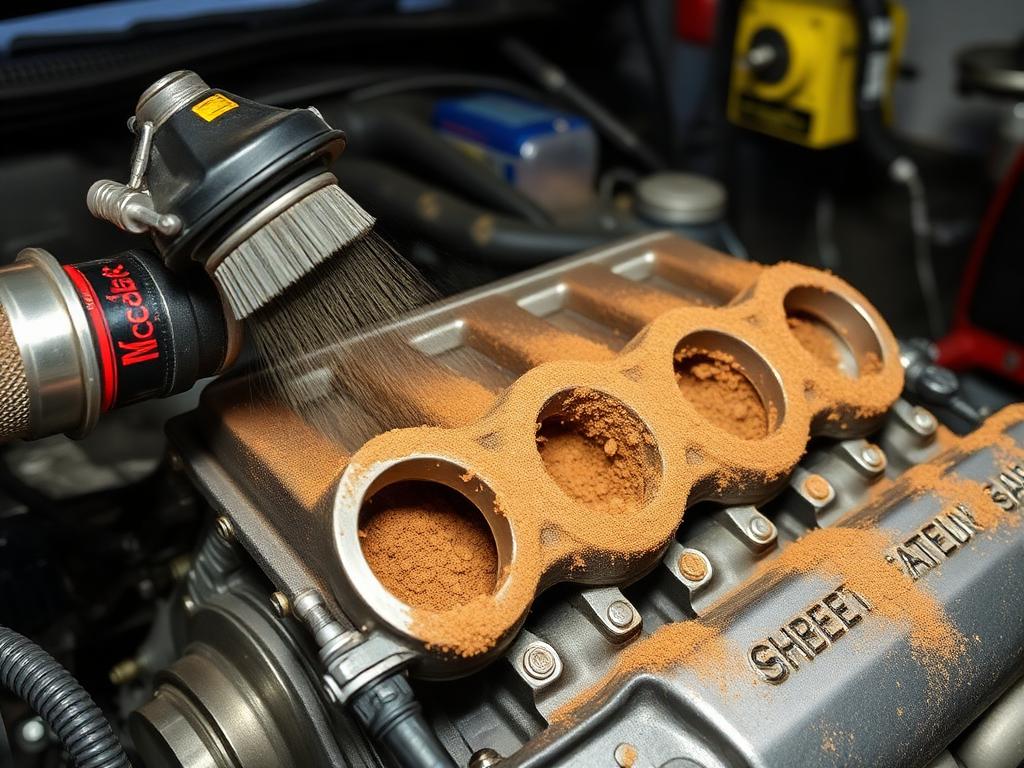
What this service solves
Walnut blasting addresses carbon build-up on intake valves and contamination of the intake tract on modern direct injection engines. It's a problem that doesn't appear overnight, but gradually degrades how the engine behaves.
This service makes sense especially when you want to restore proper airflow to the engine, improve how it runs and prevent small operating issues from turning into a larger service job.
When to address this service
It's usually time to act when you notice symptoms typical for a contaminated intake and dirty intake valves.
- The engine doesn't feel as responsive as it used to
- The idle is unstable
- The vehicle may have higher fuel consumption
- Engine response is less smooth
- Diagnostics or the overall behaviour of the vehicle suggest combustion issues
- The vehicle has a direct injection engine and the intake hasn't been cleaned for a long time
What's done during the service
During walnut blasting we first remove the intake manifold to gain access to the intake valves. The valves are then sealed according to the specific procedure and an abrasive material made of crushed walnut shells is applied under pressure, which removes carbon deposits without damaging the metal parts.
During the process the debris is continuously vacuumed away. After cleaning, the system is reassembled and checked to make sure everything is properly fitted and ready for further operation.
Service procedure
- Removal of the intake manifold to access the intake valves
- Sealing of the valves according to the work procedure
- Application of abrasive crushed-shell material under pressure
- Continuous extraction of debris and loosened carbon
- Reassembly and a check that the system is properly put together
Why this service matters
With proper airflow, the engine runs more stably, more smoothly and more efficiently. That's why a clean intake matters not only for performance, but also for reliability and the overall behaviour of the vehicle.
- Smoother engine operation
- More stable idle
- Reduced negative impact of carbon build-up on fuel consumption
- Keeping the engine in better condition
- Prevention of more expensive follow-up repairs
What happens if you neglect it
If carbon build-up in the intake is left untreated for a long time, deposits can keep layering and further restrict airflow into the engine. This can show up as worse running, weaker throttle response, an unstable idle and other operating issues.
Postponing usually doesn't save money — it raises the risk of higher costs down the line.
- Gradual layering of carbon on the intake valves
- Weaker engine response to throttle
- Unstable idle and uneven engine operation
- More demanding diagnostics and repair later on
- Higher risk of additional costs in the future
Why it pays off to address this in time
Timely walnut blasting is a preventive intervention that helps restore proper intake function before the contamination fully shows up in driving and operation. In practice it means a lower likelihood that you'll have to deal with the issue only once the engine is noticeably weaker, runs unevenly and further service is more complicated.
The difference between addressing the issue in time and postponing it shows mainly in the scope of the consequences. Prevention is generally cheaper, simpler and more predictable than dealing with a long-neglected condition.
Why choose our workshop
With this service, it's important that the work isn't done blindly, but as a targeted intervention with a clear purpose. That's exactly what our approach is built on.
What we stand for
- We first look at the cause and the technical condition, only then propose a specific procedure
- We explain what's done during the service and why it makes sense in your case
- We work transparently, with a clear scope of work and without inflating the repair
- We focus on tasks we can perform expertly and predictably
- Our priority is a working result, not unnecessarily complicated explanations
Frequently asked questions
Short answers to the questions customers ask most often.
- Which engines is walnut blasting intended for?
The service is a specialised job for direct injection engines, where carbon gradually builds up on the intake valves. On these engines, intake contamination restricts airflow and gradually affects engine operation.
- How do I know it's time for intake cleaning?
Typical signs are a less responsive engine, an unstable idle, possibly higher fuel consumption, less smooth engine response, or signals from diagnostics and the overall behaviour of the vehicle suggesting combustion issues.
- How does walnut blasting itself work?
First the intake manifold is removed to access the intake valves. The valves are sealed according to the work procedure and an abrasive material of crushed walnut shells is applied under pressure, removing carbon deposits without damaging the metal parts. Debris is continuously vacuumed away, and after cleaning the system is reassembled and checked.
- What happens if I don't address the carbon build-up?
Deposits can keep layering and further restrict airflow into the engine. This can lead to worse running, weaker throttle response, an unstable idle and other operating issues. A mild deterioration can later turn into a problem that's more demanding to diagnose and to fix.
- Is walnut blasting worth doing preventively as well?
Yes. Timely walnut blasting helps restore proper intake function before contamination fully shows up in driving and operation. Prevention is generally cheaper, simpler and more predictable than dealing with a long-neglected condition.
Book your walnut blasting before degraded engine operation fully takes hold.
Get in touch and we'll see whether your symptoms are typical for a contaminated intake and what approach makes sense.
Schedule an appointment